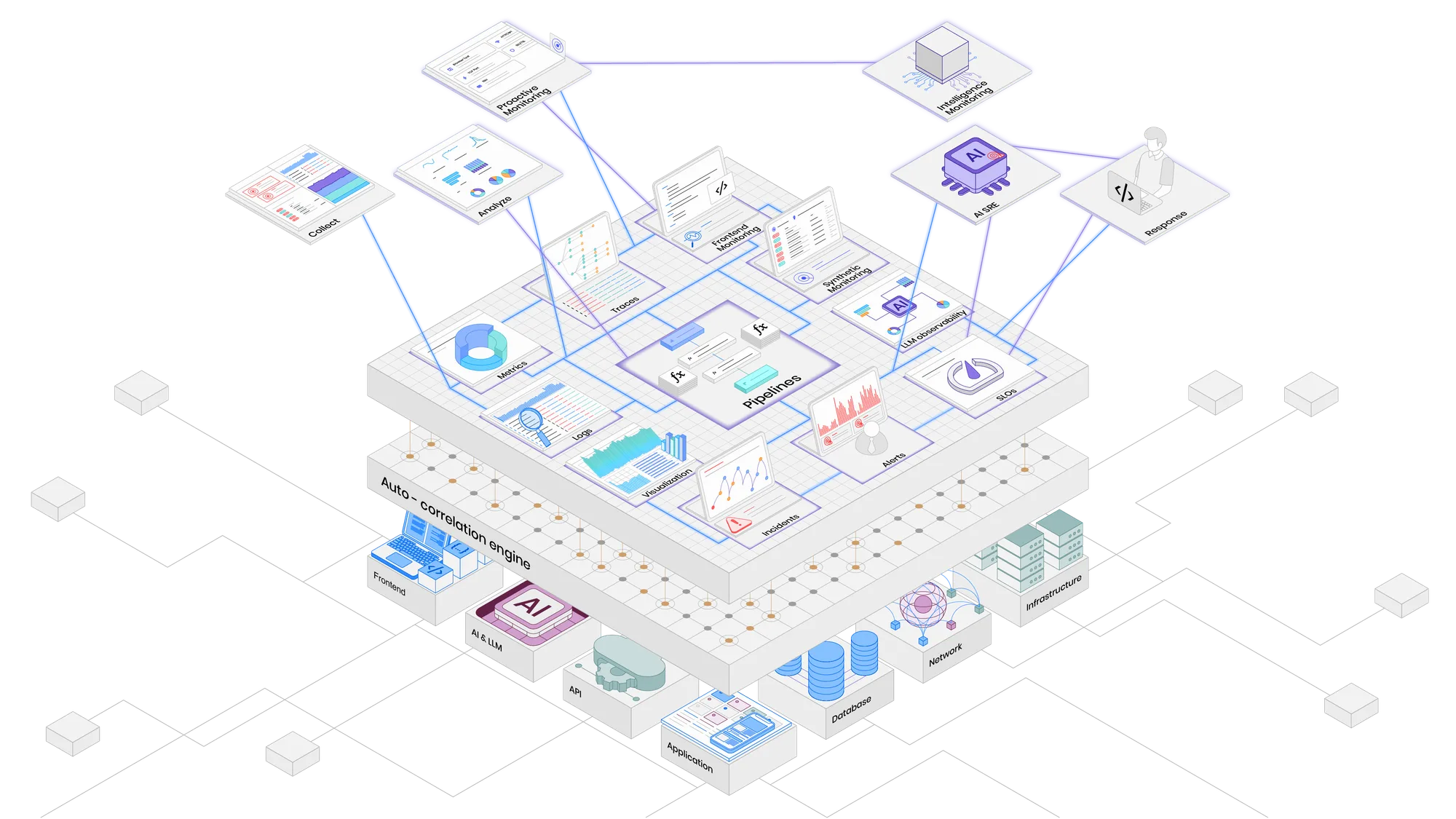
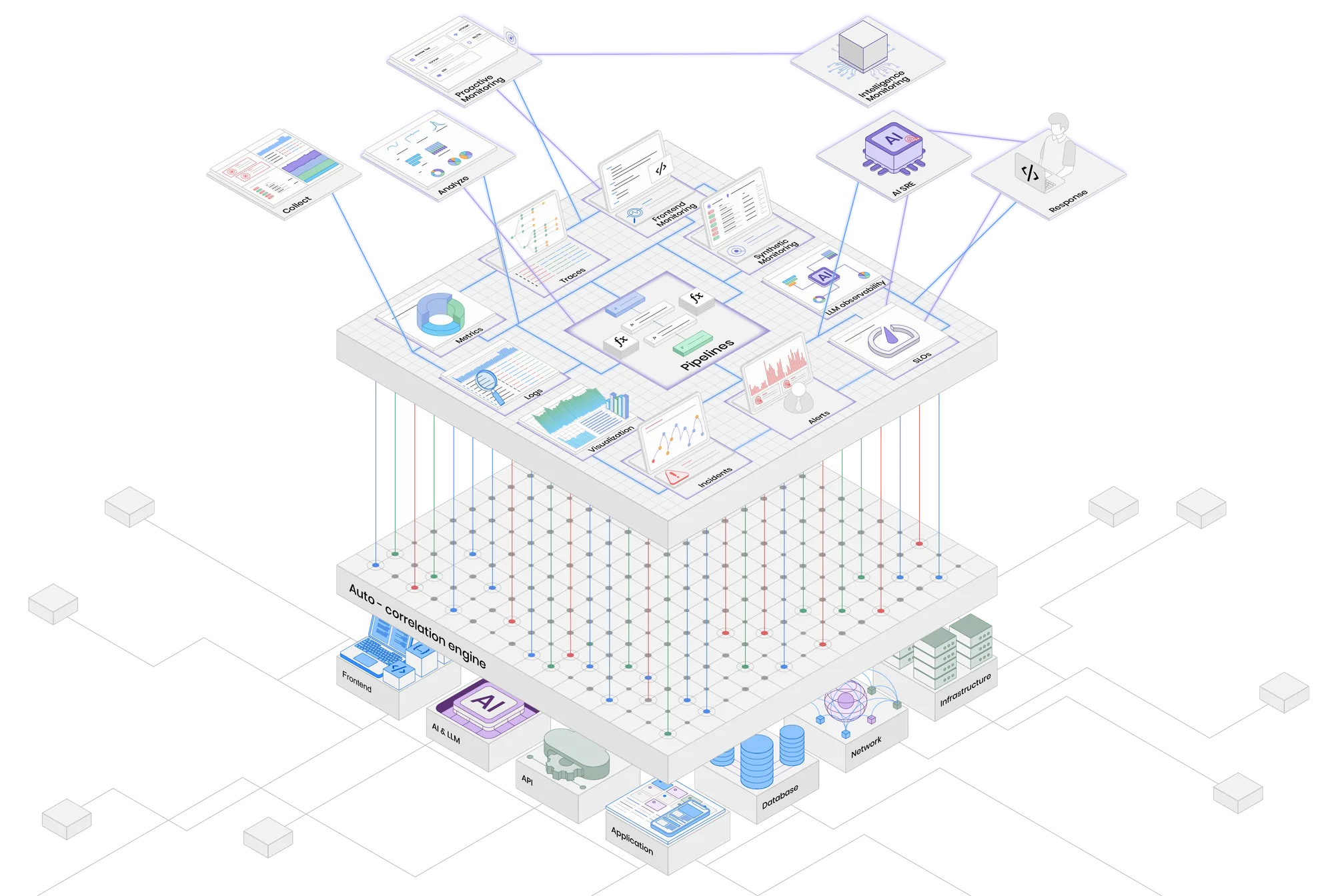
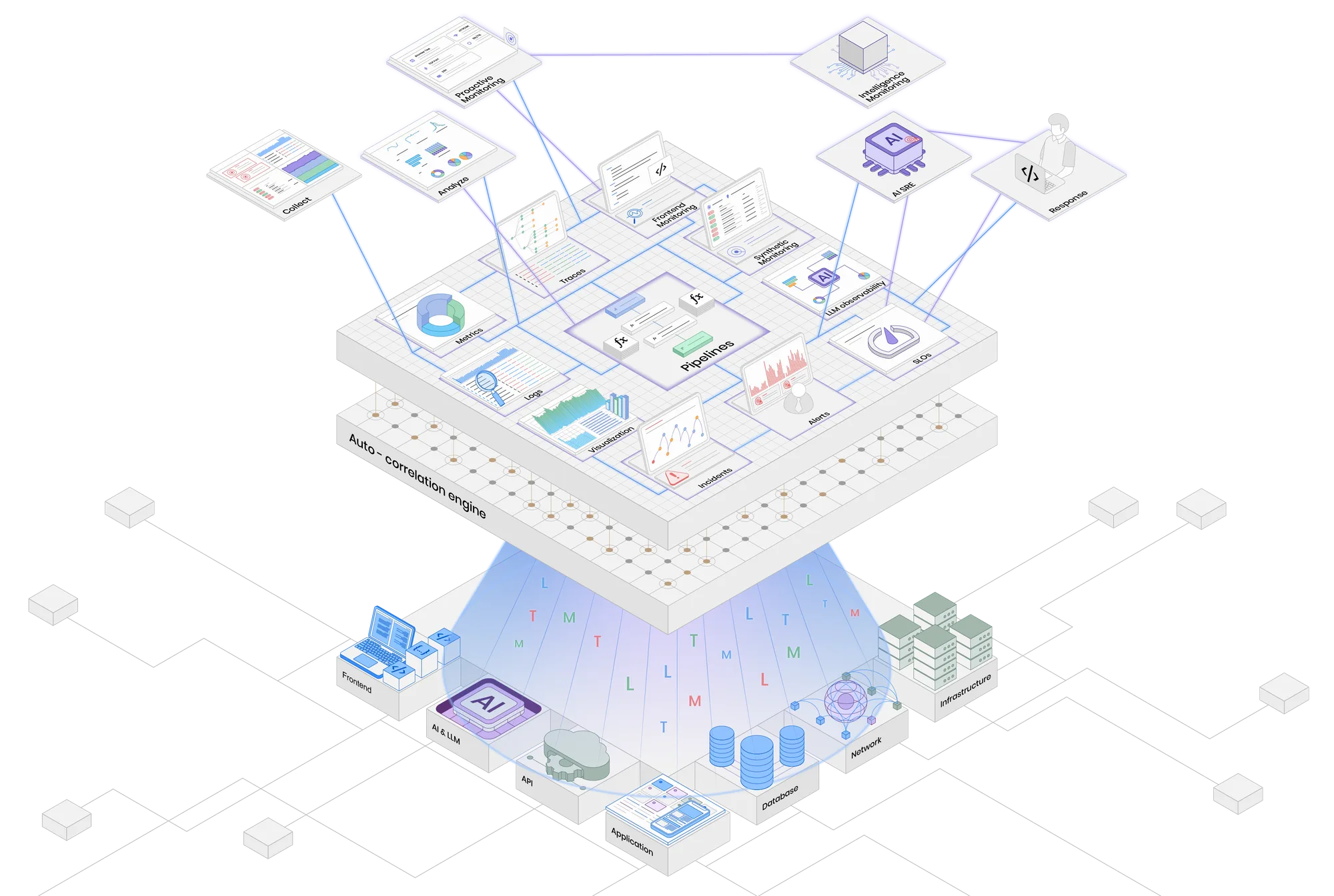
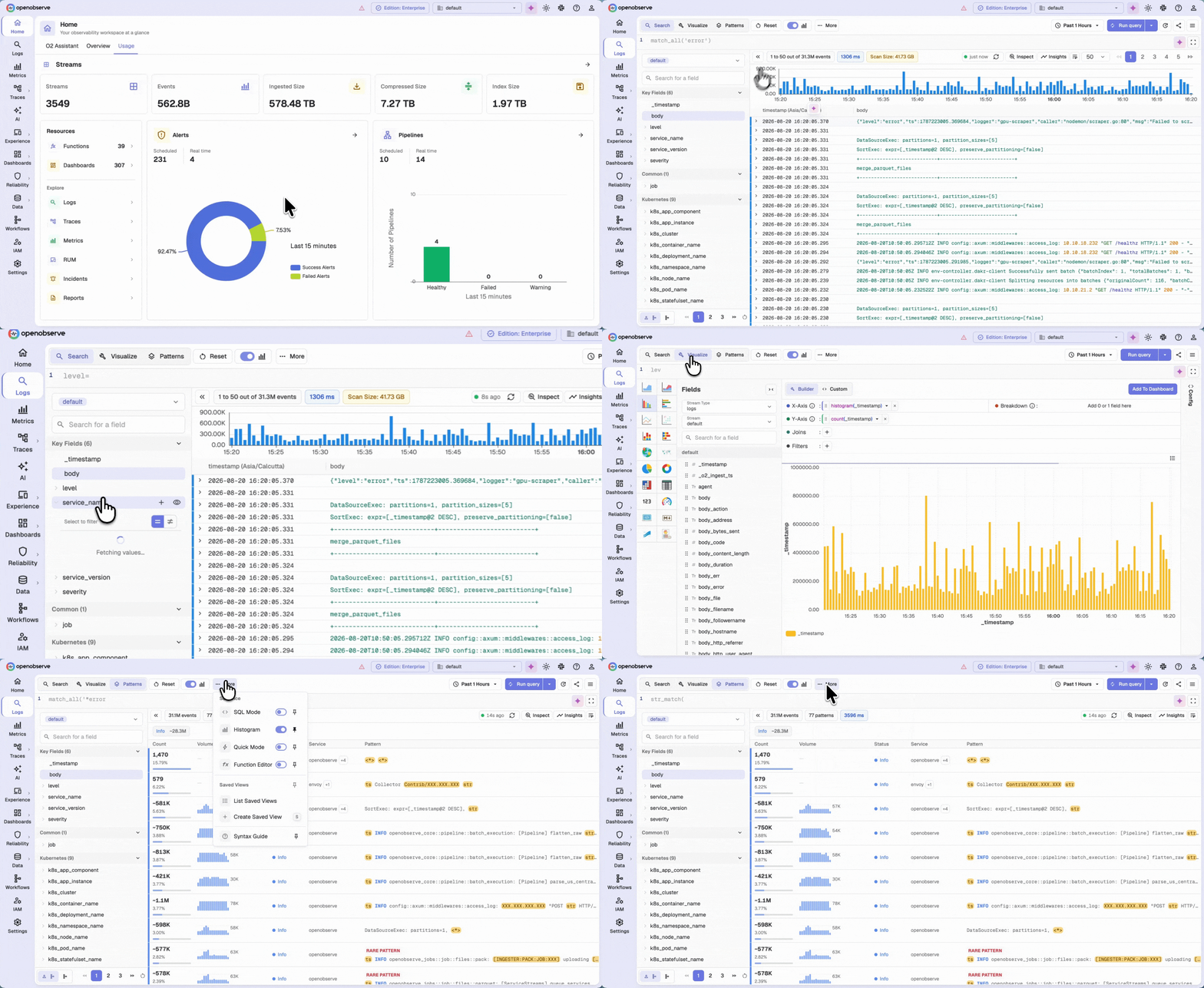
A modern, scalable architecture designed for high performance and low cost
It's in Our DNA: Open
Source
Standards
Protocols
Observability
Design
Community
Open Source
Our code is fully open source, allowing for community contributions, security audits, and complete control over your observability data.
AGPL-3.0 license
Active community
Transparent development
Open Standards
We embrace and contribute to industry standards, ensuring compatibility and interoperability with your existing tools and workflows.
OpenTelemetry compatible
Standard API interfaces
Vendor-neutral approach
Efficiency
"OpenObserve has proven to be a reliable and cost-effective solution built to address real-world challenges."
Wayne Creel
CTO, ONEngine
Lower Storage Costs
140x lower storage cost when benchmarked against Elasticsearch.
High Compression
OpenObserve provides high compression (~40x), columnar storage with Apache Parquet.
Bring Your Own Bucket
OpenObserve supports efficient long-term storage including local disk, S3, MinIO, GCS, and Azure Blob Storage.
Performance
"[OpenObserve is] super fast, definitely very lightweight, and you can get started with an initial POC in two to three minutes to be honest."
Ajith Natarajan
Lead Software Engineer, Radius.ai
Performant Language
OpenObserve is written in Rust.
Performant Architecture
OpenObserve utilizes the DataFusion query engine to directly query Parquet files.
Performant Platform
Internal query benchmarking of 1 petabyte of data returned in 2 seconds.
Scalability
"Today, I think we run our entire production logs through OpenObserve... it’s been a phenomenal journey so far."
Shailesh Mangal
CTO, Decklar
Enterprise Scale
Providing self-hosted logging for Fortune 100 Enterprises.
Stateless Architecture
OpenObserve’s stateless node architecture allows horizontal scaling without data complexity.
Performant at Scale
OpenObserve uses result and disk caching to keep the platform performant, even at scale.
Frequently Asked Questions
OpenObserve (O2) is an open source observability platform that unifies logs, metrics, traces, and real user monitoring into a single tool. It deploys as one binary
or Helm chart, stores data on low cost object storage, and uses SQL and PromQL — no proprietary query language to learn.
It's built for DevOps and platform engineering teams that want full stack observability without stitching together multiple tools, managing unpredictable SaaS bills, or paying for indexed storage they don't need. Over 6,000 organizations use it, from startups monitoring a single cluster to Fortune 100 companies ingesting more than 2 PB/day.
What sets it apart: up to 140x lower storage costs than Elasticsearch via Apache Parquet columnar storage, 8 to 10x lower total cost than Datadog with flat per GB ingestion pricing and unlimited users, native OpenTelemetry support with no vendor lock in, and a built in AI SRE Agent for automated root cause analysis and natural language querying.
Most observability stacks fall into two camps. Expensive SaaS platforms like Datadog, Splunk, and New Relic charge per host, per metric, and per user, leading to
unpredictable bills. Self managed open source stacks like Grafana LGTM or the ELK stack require maintaining three to five separate components, each with its own query language and operational overhead.
OpenObserve takes a third approach: a single unified platform that is open source, OpenTelemetry native, and runs as one binary. Logs, metrics, traces, dashboards, alerts, RUM, and session replay live in one place with one query language and one storage layer. This removes the multi tool fragmentation of the Grafana stack while avoiding the vendor lock in and per seat pricing of Datadog and Splunk. The Self Hosted Enterprise plan is free up to 200 GB/day and includes SSO, RBAC, and adit trail — features that are paid add ons or absent in competing free tiers.
OpenObserve pricing is ingestion based. You pay per GB ingested, not per host, per user, per metric, or per span. The OSS plan is completely free for self hosting
with no usage limits. The Self Hosted Enterprise plan is free up to 200 GB/day ingestion and includes SSO, RBAC, audit trail, and federated search. Cloud plans start with a 14 day free trial, include a 30% discount for annual commitment, and offer high volume discounts for Enterprise. See Pricing for current rates and the pricing calculator to estimate your monthly cost.
Yes. OpenObserve supports multi organization isolation. Each customer or team gets their own organization with separate data, users, streams, dashboards, and
alerts. This is available in the Self Hosted Enterprise plan and Cloud Enterprise. For Kubernetes environments, you can route data per namespace or per cluster using the OpenTelemetry Collector with organization level routing.
The Self Hosted Enterprise and Cloud Enterprise plans support SAML, OIDC, and OAuth, covering Active Directory, Microsoft Entra ID, Keycloak, Okta, Google
Workspace, and other identity providers. RBAC is included for granular role based access control within each organization. SSO is available free up to 200 GB/day ingestion.
From Grafana: OpenObserve supports PromQL, so metric queries and alert rules translate directly. Dashboards can be recreated using the same SQL or PromQL queries across 19+ chart types. From Datadog: if you are already on OpenTelemetry, repoint your OTel Collector to OpenObserve. If using the Datadog agent, route through the OTel Collector's StatsD receiver. The recommended approach is to run both platforms in parallel for one to two months before cutover.
Three paths. The Helm chart deploys the full stack in HA mode in under five minutes and is the recommended approach. A single binary container works for small environments and POCs. Or use OpenObserve Cloud for a fully managed, zero infrastructure option. For log shipping, deploy the OpenTelemetry Collector as a DaemonSet or sidecar — no changes to your application Docker images needed. See openobserve.ai/downloads for the Helm chart and configuration guides.
Yes. The O2 AI Assistant converts natural language to SQL and PromQL, summarizes log patterns and anomalies, generates dashboards and alerts from plain English descriptions, and compares log behavior across deployments to surface regressions. The AI SRE Agent correlates alerts into incidents and identifies root causes automatically. OpenObserve also supports MCP so external AI agents can query your observability data directly. The AI Assistant is included in Self Hosted Enterprise and Cloud Enterprise plans.
OpenObserve pulls metrics directly from the CloudWatch API — no intermediate collector required. Fluent Bit and Vector are supported with ready made configurations for log shipping. Any OpenTelemetry compatible source works out of the box, plus Auth0, Cloudflare, N8N, and tools that speak the Elasticsearch bulk API. MCP support allows AI coding assistants to query logs, metrics, and traces during development and debugging.
Yes. Built in alerting supports threshold, anomaly, and composite alert types. Alerts trigger notifications to Slack, Microsoft Teams, email, PagerDuty, and webhooks. The AI SRE Agent correlates related alerts into a single incident and identifies the likely root cause, reducing alert fatigue and replacing the need for separate tools like OpsGenie for observability alerts.
Ready to get started?
Try OpenObserve today for more efficient and performant observability.